
What Owls Can Teach Leaders
See further. Hear deeper. Lead wiser. Lessons in turning to biomimicry for leadership innovation.

When engineers design faster trains, surgeons refine tools, or architects improve ventilation, they often look first to nature. This practice is called biomimicry—learning from and emulating strategies life has developed over billions of years. Velcro came from burrs clinging to fur. Medical needles mimic the mosquito’s bite. Airplane wings trace the aerodynamics of bird feathers.
But biomimicry isn’t just about invention. It’s also a mindset. Leaders who pause to observe nature—not as backdrop but as teacher—cultivate humility, patience, and adaptability. Research shows that even a glimpse of natural scenes lowers stress hormones, steadies the heart, and restores attention. As Dacher Keltner notes in Awe, experiences in nature reliably evoke awe—a state that quiets the ego, expands perspective, and boosts cooperation. A calmer, more expansive nervous system helps leaders see more clearly, listen more deeply, and decide more wisely.
Scratches That Shape Leadership
Every time I return to our countryside home outside Berlin, I’m reminded of this lesson. We converted an old cow barn into a living space. The cows are long gone, but their presence remains. My favorite feature is a heavy wooden post in the living room, worn smooth where generations of cows scratched their backs. It’s basically the bovine version of a massage tool—and frankly, not a bad idea for humans either.
That post isn’t just a relic; it shows how history leaves its mark. Leaders carry something similar: the imprint of those who came before them. Inheritance can feel like baggage, or it can serve as a grounding source of perspective and wisdom—depending on how we choose to utilize it.
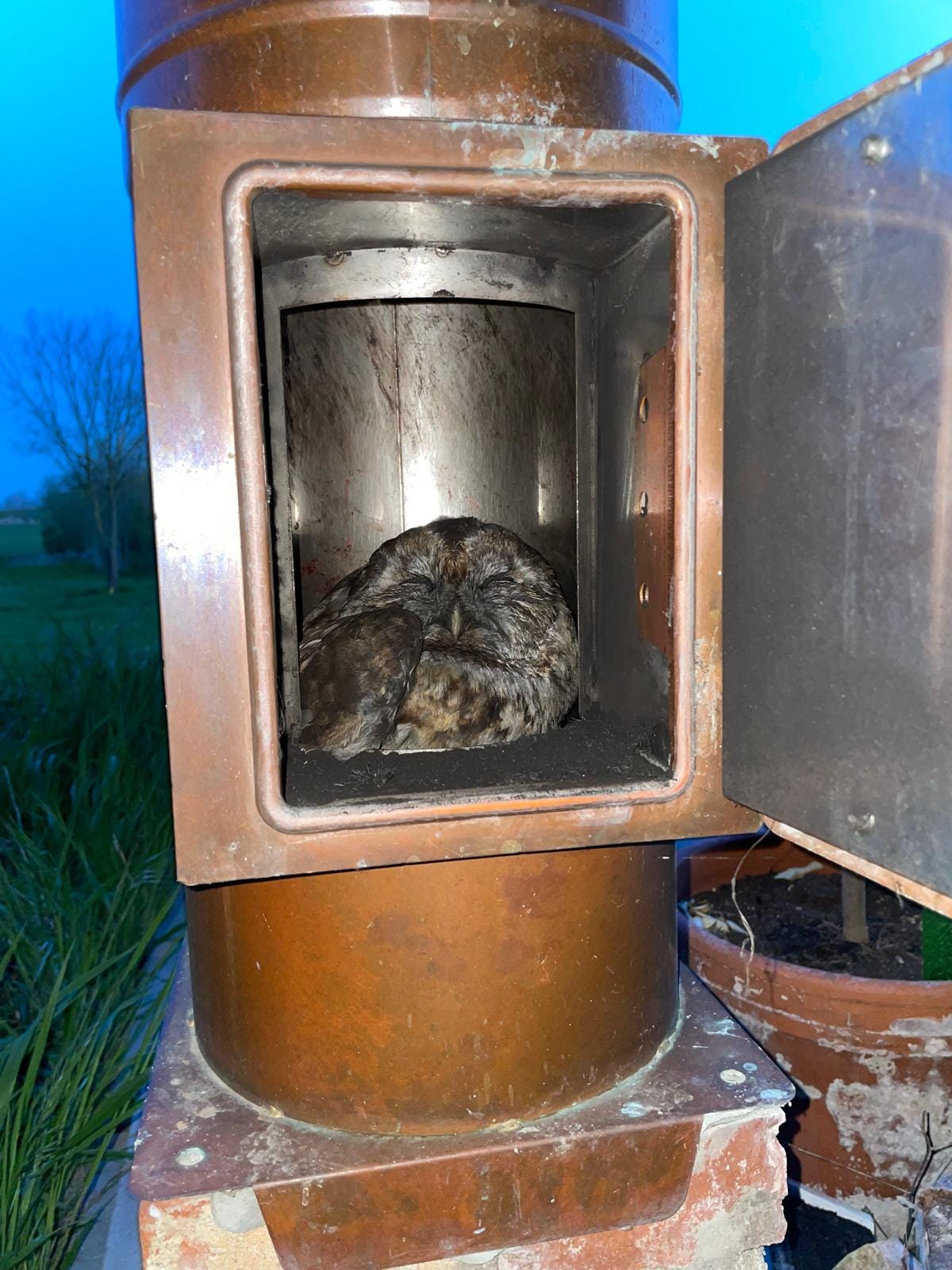
A bit dirty, but rescued.
Our Housemates, the Owls
Today, our barn has new residents: a family of five owls. They make their presence known in sound, shadow, and flight. One day, an owlet tumbled into the chimney—rescued only by my husband and a neighbor with quick hands and big hearts. Relief quickly gave way to reflection: reshaping habitats, whether for animals or people, always carries responsibility.
For leaders, that responsibility is twofold: to care for those affected by change, and to learn from creatures who have been adapting far longer than we have. Just as owls have evolved to survive in shifting environments, leadership requires humility to observe, listen, and adapt wisely when altering the conditions others must live in.
What Owls Can Teach Leaders
Owls survive through traits honed over millennia. And if you look closely, those same traits double as profound lessons in leadership.
Silent flight: Owls remind us that not all influence needs to be loud. Their quiet approach isn’t weakness—it’s survival. For leaders, restraint and timing can be more effective than constant noise. Sometimes the best move is to let actions, not volume, speak.
Seeing in darkness: Owls hunt at night, not because it’s easy but because they’ve adapted to uncertainty. Leaders, too, are often asked to act without full visibility. The lesson isn’t to wait for perfect clarity—it’s to move forward with discernment, balancing risk with intuition.
Turning the head: Owls can’t move their eyes, so they rotate their heads to broaden their view. For leaders, this is a call to deliberately widen perspective: step back, scan the horizon, and see beyond your fixed line of sight. That pause often makes the difference between a short-sighted decision and a wise one.
Keen hearing: Owls hear what others miss. In leadership, this means tuning in to quiet voices, subtle cues, and signals at the edges. Often the whisper carries more truth than the shout.
Purposeful communication: Owls have rich vocal repertoires: hoots, screeches, even bill-snaps, each carrying specific meaning. For leaders, the lesson is clear: communication doesn’t need to be constant, but it does need to be intentional. Every “hoot” should matter.
Commitment to the next generation: Courtship duets, tireless feeding of chicks, fierce protection of nests—owls invest heavily in raising young, sometimes at great personal cost. Leadership, too, is about stewardship. It’s not glamorous work—it’s repetitive, demanding, and often invisible—but it builds the future. Leaders are judged not only by personal achievements but by how well they prepare others to thrive.
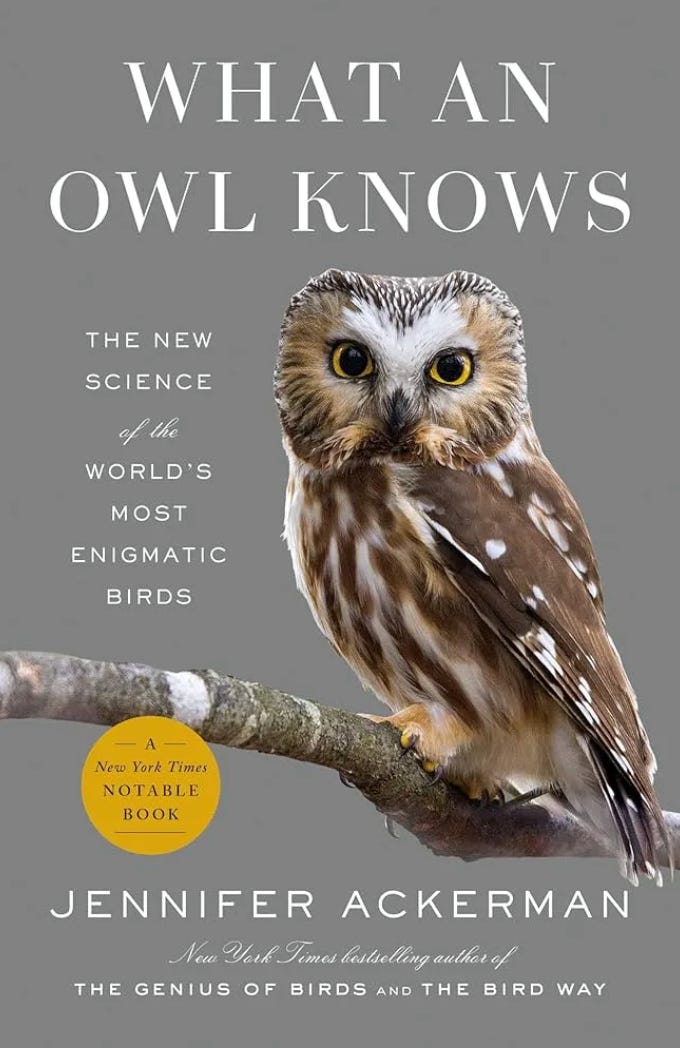
Patience in complexity: As Jennifer Ackerman writes in What an Owl Knows, studying owls requires persistence: they are nocturnal, camouflaged, and elusive. Scientists spend nights listening, waiting, and watching. Leadership in complexity is no different. The truth doesn’t always reveal itself in daylight. Sometimes answers only come when you’re willing to wait, listen deeply, and explore in unconventional ways.
One of our resident barn owls in flight.
Returning to Nature’s Wisdom
Nature has been practicing leadership far longer than we have. It teaches that strength can come from silence, perspective from turning your head, resilience from listening deeply, and legacy from nurturing the next generation. These aren’t just poetic metaphors—they’re practical survival skills.
In the months ahead, I’ll be sharing more about biomimicry and what nature can teach us. My hope is that these lessons don’t just inspire but also remind us to lead with more humility, presence, and care—for people, and for the planet that sustains us.
So today, notice one thing in nature—a bird, a tree, even a patch of sky—and let it remind you what kind of leader you want to be.
Warmly,
Lisa
P.S. If you want to fall in love with owls the way I have, Jennifer Ackerman’s What an Owl Knows is a beautiful dive into the science and wonder of these birds.
Practical Leadership Tips Summarized:
Lead quietly when needed: Like an owl’s silent flight, choose restraint and timing over constant noise. Actions often carry more authority than volume.
Widen your view: When stuck in one perspective, “turn your head.” Deliberately scan for overlooked angles before deciding.
Tune in to the whispers: The quietest voices often reveal the biggest truths. Practice listening for subtle signals others miss.
A big "hoot" to this one. What worked for me in this piece that as a writer you made us care about owls and in part about nature that hones far superior insights than humans realize.
Enjoyed that article. We can learn a lot from nature. If we are but open to it.